Ready to put your crypto to work for you? If you've been hearing buzz about earning passive income with digital assets, you're likely curious about how to choose and start staking crypto safely. It's an increasingly popular way for cryptocurrency holders to not just hold their assets, but to actively grow them while contributing to the health and security of blockchain networks. But like any emerging financial frontier, navigating the world of staking requires a clear roadmap, a bit of savvy, and a healthy dose of caution.
Consider this your plain-spoken, no-nonsense guide to understanding crypto staking. We’ll cut through the jargon, lay out the options, and help you make informed decisions, ensuring you’re prepared for the opportunities and aware of the risks.
At a Glance: Staking Crypto Essentials
- What it is: Locking up your cryptocurrencies to support a blockchain network, earning rewards in return.
- Proof of Stake (PoS): Staking is only possible with cryptocurrencies that use the Proof of Stake consensus mechanism, not Proof of Work coins like Bitcoin.
- Benefits: Passive income (3-25% annually), enhanced network security, more eco-friendly than mining, and often grants voting rights.
- Key Risks: Price volatility of your staked assets, lock-up periods, potential penalties (slashing), platform security risks, and evolving tax regulations.
- How to start: Research projects, choose a staking method (exchange, wallet, direct), acquire tokens, initiate staking, and monitor your earnings.
- Best Practice: Diversify, do your due diligence on projects, understand fees, prioritize security, and consult a tax professional.
Unpacking Crypto Staking: What Exactly Are You Doing?
Imagine putting your money in a savings account, but instead of just sitting there, it’s actively being used to help run the bank, and in return, you get a significant interest payment. That’s a simplified way to think about crypto staking.
In the world of blockchain, staking means you're "locking up" a certain amount of your cryptocurrency to help secure and operate a network. This process is fundamental to blockchains that use a "Proof of Stake" (PoS) consensus mechanism. Unlike "Proof of Work" (PoW) systems (which Bitcoin uses, relying on powerful computers to solve complex puzzles), PoS relies on stakers committing their coins to verify transactions and create new blocks. By doing so, you're essentially becoming a vital part of the network's infrastructure, and for your service, the network rewards you with additional tokens.
This commitment helps maintain the blockchain's integrity and decentralization, making it more robust against attacks. It’s a win-win: you earn passive income, and the network benefits from your participation.
Why Staking Crypto Might Be Your Next Move
The allure of staking isn't just about buzz; it offers tangible advantages that make it an attractive option for many crypto holders.
- Generates Passive Income: This is often the primary draw. Staking allows your dormant crypto assets to work for you, much like earning interest in a traditional savings account, but with potentially much higher yields. Annual Percentage Yields (APYs) typically range from 3% to 25%, though some smaller, newer projects might promise more (and carry higher risk).
- Enhances Network Security and Decentralization: By participating, you’re directly contributing to the strength and resilience of the blockchain. More stakers mean a more distributed and secure network, which benefits everyone.
- Environmentally Friendly: Compared to energy-intensive Proof of Work mining, staking consumes significantly less electricity. It doesn't require specialized, power-hungry hardware, making it a "greener" way to engage with crypto.
- Participate in Governance: Many Proof of Stake projects grant stakers voting rights on important protocol development decisions. This means your staked tokens often give you a voice in the future direction of the blockchain you support.
Considering these benefits, it's worth exploring whether is crypto staking a good investment? for your personal financial goals and risk tolerance.
The Flip Side: Risks You Can't Ignore
While the benefits are clear, staking crypto isn't without its caveats. A responsible approach means understanding the potential downsides before you commit your funds.
- Price Volatility: This is perhaps the biggest risk. The value of your staked cryptocurrency can decrease if its market price falls. Even if you're earning 10% APY, a 20% drop in the token's value means you're still in the red. Rewards can be quickly offset by market downturns.
- Lock-up Periods: Many staking protocols require you to lock up your funds for a specific duration – days, weeks, or even months. During this period, you cannot sell, trade, or withdraw your tokens. This illiquidity can be problematic if you need quick access to your capital or if the market takes a sudden dive.
- Slashing: Some networks have penalties for validators who misbehave (e.g., going offline, double-signing transactions, or acting maliciously). If you're running your own validator or delegating to one that performs poorly, a portion of your staked funds could be "slashed" or forfeited.
- Platform Risks: If you stake through a third-party service (an exchange, broker, or DeFi platform), you introduce counterparty risk. These platforms can be vulnerable to hacks, technical glitches, or even mismanagement, potentially leading to the loss of your assets.
- Regulatory Changes: The cryptocurrency landscape is still evolving, and regulations regarding staking activities and taxation are far from settled in many jurisdictions. Changes could impact the profitability or even legality of staking in the future.
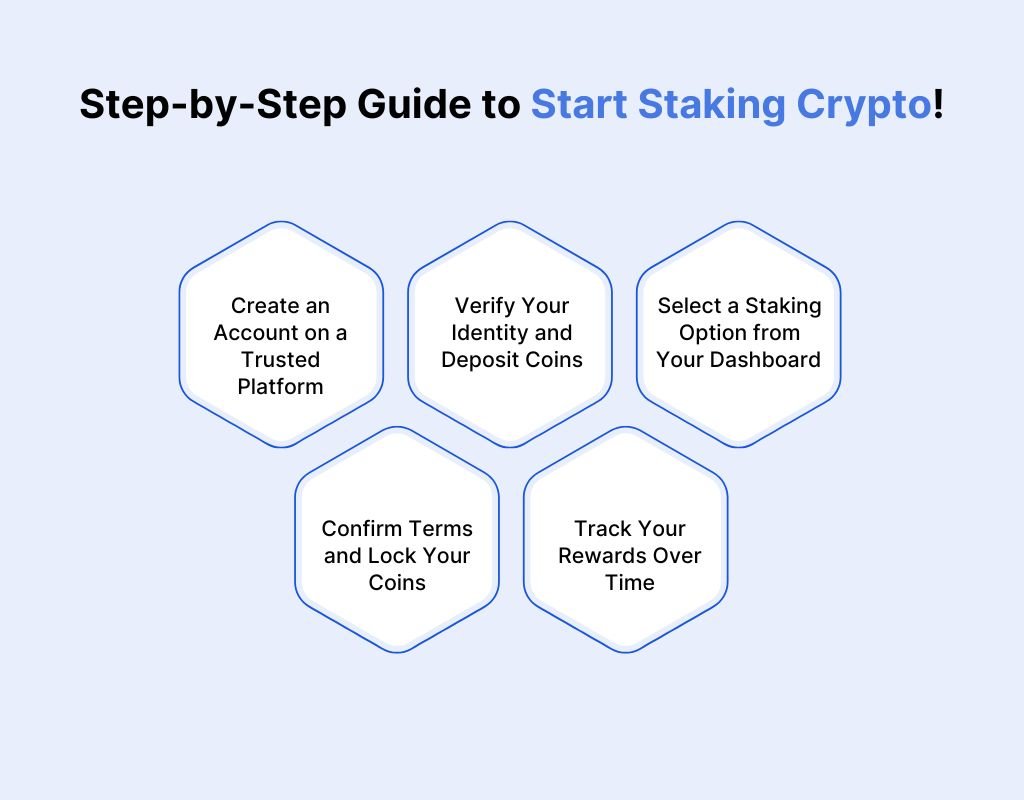
Your Roadmap to Staking Crypto: A Step-by-Step Guide
Ready to get started? Here’s a general framework to guide your journey into crypto staking. Remember, specifics will vary depending on the cryptocurrency and platform you choose.
Step 1: Research, Research, Research – Know Your Project
Before you commit a single token, deep dive into the projects you're considering. Don’t just look at the highest APY.
- Project Reputation & Team: Who is behind the project? Do they have a clear roadmap and a strong community? A solid, reputable project is a safer bet.
- Yields and Economics: Understand how rewards are generated and the sustainability of the stated APY. Is it truly passive, or are there hidden costs?
- Minimum Requirements: Do you need a certain number of tokens to stake? Some networks, like Ethereum for running a full validator node, require substantial capital (32 ETH).
- Lock-up Periods & Unbonding Times: How long will your funds be inaccessible? Also, consider the "unbonding" period – the time it takes to unstake your tokens and make them liquid again, which can sometimes be several weeks.
- Slashing Risks: Understand the specific slashing conditions for the network and the potential penalties.
Step 2: Pick Your Staking Path – How You Want to Stake
There are several ways to stake, each with different levels of technical complexity, control, and potential rewards. Choose the method that best fits your comfort level and expertise.
- Crypto Brokers: These platforms offer the easiest entry point for beginners. They handle all the technical complexities, allowing you to stake directly within their user-friendly interface. Examples like Bitpanda Earn offer attractive APYs, often with weekly rewards and no lock-in periods, making it very accessible.
- Crypto Exchanges: Many major exchanges (like Binance, Kraken, Coinbase) offer staking services for a variety of PoS assets. While generally straightforward, they might require a deeper understanding of trading and could have specific lock-in periods or varying reward payout frequencies. The exchange typically pools your funds with others and acts as the validator on your behalf.
- Staking or DeFi Platforms: These platforms, sometimes decentralized (DeFi), specialize in staking and yield farming. They vary greatly, often requiring you to connect your own crypto wallet (like MetaMask or Ledger Live). This method demands careful selection of a trustworthy platform, understanding their specific processes, and being aware of their lock-in periods and minimum stakes.
- Delegated Staking: This is a popular option where you "delegate" your tokens to an established validator. You retain ownership of your tokens in your wallet, but you empower the validator to use them to participate in the network's consensus process. They handle all the technical details, and you typically share a portion of the rewards with them as a fee.
- Liquid Staking: An innovation in DeFi, liquid staking addresses the lock-up issue. When you stake your assets, you receive a "liquid staking derivative" (LSD) in return (e.g., stETH for staked Ethereum). This synthetic token represents your staked asset plus earned rewards, and it can be used across other DeFi protocols for additional yield, while your original asset remains locked and earning staking rewards. This offers greater capital efficiency but introduces additional smart contract risks.
- Directly in the Blockchain Network (Native Staking): This method involves running your own validator node. It offers the highest rewards and maximum control, as you're directly contributing to network functionality and security. However, it requires a significant technical understanding, specific hardware/software, and often a substantial minimum token stake (e.g., 32 ETH for an Ethereum validator). This is generally for advanced users.
Step 3: Set Up Your Secure Crypto Wallet
No matter which staking method you choose (unless you're using a broker that holds your keys), you'll need a crypto wallet that supports your chosen cryptocurrency and its staking mechanism.
- Hardware Wallets (Cold Storage): For larger amounts, hardware wallets like Ledger or Trezor offer the highest security. They keep your private keys offline, making them immune to online hacks. Many support direct staking or integration with staking platforms.
- Software Wallets (Hot Wallets): These are apps or browser extensions (e.g., MetaMask, Trust Wallet) convenient for smaller amounts or frequent use. Ensure they are compatible with your chosen staking platform.
- Secure Your Seed Phrase: Regardless of the wallet type, your seed phrase (a series of 12-24 words) is the master key to your funds. Write it down, store it offline in multiple secure, discreet locations, and never share it with anyone.
Step 4: Acquire the Required Tokens
Purchase the specific cryptocurrency you intend to stake. You can typically do this through a crypto exchange or broker using fiat currency or by swapping other cryptocurrencies. Ensure you have enough to meet any minimum staking requirements and to cover network transaction fees.
Step 5: Initiate Staking
Follow the specific instructions of your chosen platform, wallet, or validator. This usually involves:
- Connecting your wallet: If using a DeFi platform or delegating.
- Selecting the staking option: Often labeled "Stake," "Earn," or similar.
- Specifying the amount: Enter how many tokens you wish to stake.
- Confirming the transaction: Double-check all details, especially fees and lock-up periods, before approving.
- Waiting for confirmation: The transaction will be processed on the blockchain.
Step 6: Monitor Your Rewards & Manage Your Stake
Staking isn't a "set it and forget it" activity.
- Regularly Review Rewards: Keep an eye on your accrued rewards. Some platforms automatically compound rewards, while others require manual claiming and re-staking.
- Stay Updated: Follow the news and developments of the projects you're staking. Market conditions, protocol upgrades, or changes in reward structures can impact your returns.
- Consider Reinvesting: Compounding your rewards by restaking them can significantly boost your overall yield over time.
Popular PoS Cryptocurrencies Worth Exploring
The world of Proof of Stake is vibrant and diverse. Here are some of the most popular projects that allow staking, offering different features and opportunities:
- Cardano (ADA): Known for its academic rigor and accessibility. Staking ADA is user-friendly, often with no minimums or lock-up periods, yielding 3-5% annually. It uses the "Ouroboros" algorithm.
- Solana (SOL): A high-performance, fast blockchain with attractive staking terms and a low entry threshold. Holders typically delegate their SOL to validators.
- Polkadot (DOT): Designed for interoperability between different blockchains. You can stake DOT as a validator (requires more tokens and technical skill) or a nominator (delegating to validators) in its Nominated Proof of Stake (NPoS) system.
- Ethereum (ETH): Following its transition to Proof of Stake (Ethereum 2.0 or "The Merge"), ETH staking is a major player. Running a full validator node requires 32 ETH, but many platforms support smaller amounts through pooled staking.
- Cosmos (ATOM): Positioned as the "Internet of Blockchains," Cosmos uses a Delegated PoS with its "Tendermint" engine. It offers flexible staking conditions but typically involves an unbonding period of around 21 days.
- Tron (TRX): Utilizes a Delegated Proof of Stake (DPoS) system where TRX holders can vote for "Super Representatives" who validate transactions and earn rewards.
- Tezos (XTZ): A self-amending, permissionless protocol. XTZ holders can stake their tokens to "Bakers" who validate blocks and participate in governance.
- The Graph (GRT): An indexing protocol for querying blockchain data. GRT is an ERC20 token used by "Indexers" and "Delegators" for exchange and rewards in querying subgraphs.
- Kusama (KSM): Polkadot's "canary network" for rapid blockchain project implementation and testing. It also uses NPoS consensus, with KSM used for staking and governance.
- Polygon (POL): A scaling solution for Ethereum. Polygon uses PoS checkpoints to secure its network, with its native POL token used for network operations and staking.
- Near Protocol (NEAR): A climate-neutral, sharded Layer-1 PoS network designed for scalability. NEAR holders can participate in delegated staking via validator-operated pools.
Staking Smarter: Essential Best Practices for Success
Beyond the technical steps, adopting smart habits can significantly improve your staking experience and mitigate risks.
- Diversify Your Holdings: Don't put all your eggs (or crypto) in one basket. Staking a variety of cryptocurrencies across different projects and even different staking methods can help manage the risk of price volatility or issues with a single network.
- Due Diligence on the Project, Not Just the Yield: High yields can be enticing, but they often come with higher risk. Thoroughly examine the project's whitepaper, its technology, the strength of its development team, and the vitality of its community. A strong, viable project is more likely to provide sustainable returns.
- Account for All Fees: Staking isn't always "free." Be aware of any fees charged by validators, exchanges, or platforms. These might include commission fees on your rewards, withdrawal fees, or transaction costs. Factor these into your expected net returns.
- Consider Compounding Your Rewards: Many staking platforms offer the option to automatically or manually reinvest your earned rewards. Compounding – earning returns on your returns – can significantly accelerate your growth over time.
- Prioritize Security Above All Else: Use strong, unique passwords for all crypto accounts. Enable two-factor authentication (2FA) wherever possible. For substantial holdings, strongly consider a hardware wallet (cold storage) to keep your private keys offline and secure from online threats.
Staking Compared: How Does It Stack Up?
Understanding staking in context can help you determine if it's the right fit for your crypto strategy. Here's how it compares to other common crypto activities:
- Staking vs. Mining:
- Staking: Lower entry barrier, requires no specialized, expensive hardware (for most users), and is significantly more environmentally friendly. It's about locking coins to validate transactions.
- Mining: Demands costly, specialized hardware (ASICs or powerful GPUs) and high electricity consumption. It's about solving complex computational puzzles to validate blocks.
- Staking vs. Lending:
- Staking: Your funds support the network's consensus mechanism, offering more predictable rewards tied to network activity. Often involves lock-up periods.
- Lending: You lend your crypto to borrowers, earning interest. Rewards depend on borrowing demand, and withdrawals are often more flexible, but you take on counterparty risk from the lending platform and borrowers.
- Staking vs. Holding (HODLing):
- Staking: Actively participates in the network, generates additional income, and often grants governance rights. Your assets are productive.
- Holding: Simply owning cryptocurrency and waiting for its value to appreciate. While simple, your assets remain dormant and don't generate extra tokens.
The Tax Man Cometh: Understanding Staking's Tax Implications
The world of crypto taxation is complex and varies significantly by jurisdiction, but generally, staking rewards are considered taxable income.
- Income Tax: When you receive staking rewards, they are typically treated as ordinary income at their fair market value on the day you receive them.
- Capital Gains Tax: If you later sell your earned staking tokens (or the original staked tokens) for a profit, you may also trigger capital gains tax.
- Record Keeping: It is absolutely crucial to keep detailed records of all your staking activities: the amount staked, rewards received (including their value at the time of receipt), and any fees paid.
- Professional Advice: Due to the evolving nature of crypto regulations, it is highly advisable to consult with a qualified tax professional in your jurisdiction to understand your specific obligations and optimize your tax strategy.
What's Next for Staking? Future Trends to Watch
The staking landscape is dynamic and continuously evolving. Several key trends are shaping its future:
- Increasing Institutional Adoption: As regulatory clarity improves and infrastructure matures, more institutional investors are expected to enter the staking space, bringing significant capital and legitimacy.
- Advancements in Liquid Staking Protocols: Liquid staking is gaining momentum, offering greater versatility and capital efficiency. Expect more innovation in this area, allowing stakers to unlock the value of their locked assets across various DeFi applications.
- Emerging Cross-Chain Staking Technologies: Solutions that allow users to stake assets across different blockchain networks without moving them will enhance flexibility and accessibility.
- Clearer Regulatory Frameworks: Governments and financial bodies are working on defining clearer rules for crypto, including staking. This clarity could attract more traditional investors and mainstream adoption while also setting clearer boundaries for operations.
Ready to Earn? Your Next Steps in Crypto Staking
Choosing and starting to stake crypto can be a rewarding journey, offering a unique blend of passive income generation and active participation in the blockchain ecosystem. It’s an opportunity to transform your idle assets into productive capital, but only if approached with diligence and awareness.
Start by identifying a few promising Proof of Stake projects that align with your risk tolerance and investment goals. Don’t chase sky-high yields without understanding the underlying risks. Take the time to research their technology, team, and community. Once you have a shortlist, choose a staking method that suits your technical comfort level – whether that's the simplicity of a broker, the convenience of an exchange, or the control of a self-custody wallet.
Remember, securing your assets is paramount. Never compromise on wallet security, and always double-check transactions. As you venture into staking, stay informed about market conditions and project developments, and don't hesitate to seek professional advice for tax implications. With careful planning and continuous learning, you can confidently put your crypto to work and potentially watch your portfolio grow.