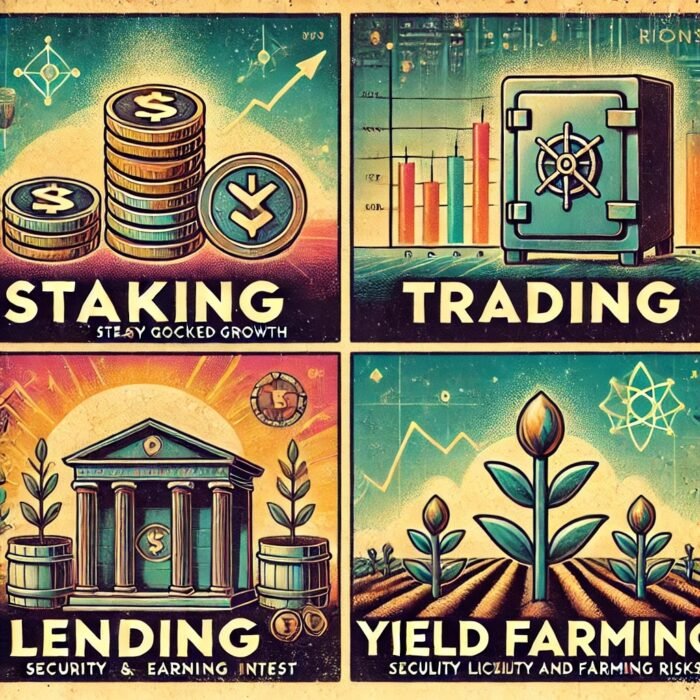
As the world of digital assets continues to evolve, a powerful, yet often misunderstood, strategy for earning passive income has come to the forefront: staking. If you've been curious about the benefits and potential returns of staking your crypto, you're not alone. This guide will demystify the process, revealing how you can contribute to blockchain security while potentially growing your digital wealth, transforming your idle assets into a working income stream.
Staking offers an enticing alternative to traditional investing, allowing participants to earn crypto rewards simply by holding and committing their assets to support a blockchain network. It's an opportunity to not just ride the waves of market appreciation, but to actively generate new coins, providing a more stable and predictable income stream in the often-volatile crypto landscape.
At a Glance: Key Takeaways on Staking
- Passive Income: Earn additional cryptocurrency by holding and committing your assets to a blockchain network.
- Network Security: Your staked funds help secure and validate transactions on Proof-of-Stake (PoS) blockchains.
- Accessible: Staking is generally more accessible than crypto mining, requiring less technical expertise and upfront hardware investment.
- Diverse Reward Sources: Income can come from newly issued block rewards, transaction fees, and even advanced validator strategies like MEV.
- Multiple Access Points: Choose from direct staking, centralized exchanges, liquid staking, or regulated ETPs, each with different trade-offs.
- Understand the Risks: Be aware of market volatility, slashing penalties, liquidity lock-ups, and counterparty risks before committing.
- Research is Key: Select projects with strong fundamentals, competitive rewards, and robust security.
What Exactly Is Staking? A Quick Primer
At its heart, staking is a fundamental mechanism of Proof-of-Stake (PoS) blockchains. Unlike Proof-of-Work (PoW) systems (like early Bitcoin), which rely on energy-intensive mining rigs to solve complex puzzles, PoS networks secure themselves through economic incentives. Stakers "lock up" a certain amount of their cryptocurrency as collateral, essentially putting their funds on the line to vouch for the integrity of transactions and create new blocks.
This act of committing your crypto empowers you to become a validator, or to delegate your stake to a validator, playing a crucial role in maintaining the network's security and operational efficiency. In return for your service and commitment, the network rewards you with newly minted coins and a share of transaction fees. It's a symbiotic relationship: you support the blockchain, and the blockchain supports your wallet.
Why Staking Matters: The Core Benefits You Can't Ignore
Staking has rapidly become a cornerstone of the digital asset economy, and for good reason. It offers a compelling blend of financial opportunity and active participation in the crypto ecosystem.
1. Earning Passive Income: Your Crypto Working for You
Imagine your savings account generating significantly more than traditional interest rates. Staking makes this a reality in the crypto world. By locking up your assets, you receive regular rewards in the form of additional tokens. These rewards are essentially a "thank you" from the network for helping validate transactions and secure the blockchain.
The income generated is typically based on the amount you stake and the duration, creating a consistent stream of new coins that can significantly enhance your overall crypto holdings over time. This passive income stream can be particularly appealing in volatile markets, providing a more predictable form of return.
2. Bolstering Network Security and Decentralization
When you stake your cryptocurrency, you're not just earning rewards; you're actively contributing to the health and security of the blockchain network. More staked assets mean a stronger, more resilient network, making it harder for malicious actors to gain control or disrupt operations. This collective effort enhances decentralization, a core tenet of the crypto ethos, by distributing validating power among many participants rather than concentrating it in a few hands.
3. Potential for Long-Term Capital Appreciation
While staking rewards provide direct income, they also offer a less direct, yet powerful, benefit: the potential for long-term capital appreciation. As a project gains more stakers and its network becomes more secure and efficient, demand for its native token can increase. This heightened demand, coupled with the utility of the token within its ecosystem, can drive up its market value. So, not only are you earning more coins, but the coins you already hold (and the new ones you earn) could also become more valuable over time.
4. An Accessible Alternative to Mining and Trading
For many, cryptocurrency mining is out of reach due to the high upfront cost of specialized hardware and the ongoing electricity expenses. Similarly, active crypto trading demands significant time, expertise, and carries substantial risk. Staking, by contrast, is far more accessible. With PoS, you don't need expensive equipment or advanced technical skills. You simply need to hold the cryptocurrency and commit it to the network, making it a democratized way to participate in and profit from the crypto revolution. For those wondering, Should you stake your crypto?, this accessibility often makes it a compelling "yes."
Unpacking Your Staking Rewards: Where the Yield Comes From
Understanding the sources of staking yield is crucial for appreciating its value. It's not "free money," but rather compensation for providing a vital service to the blockchain. Staking yields are dynamic, influenced by the balance of rewards and the overall participation rate – generally, yields are higher when less supply is staked, and lower when more is staked.
Staking yield primarily originates from three distinct sources:
1. Block Rewards (Base Rewards)
This is often the most significant component of staking yield. Block rewards are newly issued tokens distributed by the blockchain protocol to stakers who successfully validate new blocks. Think of it as the network's built-in inflation mechanism, designed to incentivize participation and compensate validators for their work. These rewards are typically paid out at a predictable rate, forming the base inflationary yield.
2. Transaction Fees (Real Yield)
Every time a transaction occurs on the network, a small fee (often called "gas") is paid. A portion of these transaction fees is collected and then distributed to the stakers who validate the blocks containing those transactions. This component of the yield is variable, directly tied to network activity and demand. When a network is busy, transaction fees can be higher, leading to increased "real yield" for stakers.
3. Maximal Extractable Value (MEV) Rewards
MEV is a more advanced and highly variable source of income for validators. It refers to the additional profit validators can extract by strategically ordering, including, or excluding transactions within a block. For example, a validator might observe a large pending trade on a decentralized exchange and strategically place their own transaction before it (front-running) to profit from the price difference, or reorder transactions to maximize arbitrage opportunities.
While controversial in some circles, MEV is a recognized and growing component of validator revenue. It adds another layer of complexity and potential profitability for those operating validator nodes.
How to Get Started: Accessing Staking Yields
The beauty of staking lies in its flexibility. There are several ways to access staking yields, each offering different levels of control, convenience, and risk exposure.
1. Direct Staking (Operating Your Own Validator or Delegating)
This is the most "crypto-native" method and typically offers the highest yield, as you retain full control over your assets and don't pay additional fees to intermediaries.
- Operating Your Own Validator Node: This involves setting up and maintaining specialized software on a dedicated server, committing a significant amount of native cryptocurrency (e.g., 32 ETH for Ethereum). You bear the full responsibility for uptime, security, and correct operation. The payoff is maximum yield, but it comes with technical complexity, slashing risk (penalties for misbehavior), and illiquidity during lock-up periods.
- Delegation: If you don't have enough crypto to run a full node or lack the technical expertise, you can delegate your stake to an existing validator. You still earn rewards (minus a small fee to the validator) without the operational headaches. This is a common and popular entry point for many stakers.
Pros: Highest potential yield, full control (for node operators), supports network decentralization.
Cons: High technical barrier (for node operators), significant capital requirement, slashing risk, illiquidity.
2. Staking via a Centralized Exchange (CEX)
For many newcomers, staking through a centralized exchange like Coinbase, Binance, or Kraken is the easiest entry point. These platforms handle all the technical complexities of running validator nodes. You simply deposit your crypto into their staking service, and they distribute rewards to you (often daily or weekly), taking a small cut for their services.
Pros: User-friendly, convenient, no technical expertise required.
Cons: Counterparty risk (you trust the exchange with your funds), potentially lower yields due to fees, may not support all cryptocurrencies.
3. Liquid Staking
Liquid staking emerged to address one of the primary drawbacks of direct staking: illiquidity. When you stake directly, your assets are often locked up for specific periods, making them inaccessible. With liquid staking, you deposit your crypto into a liquid staking protocol (e.g., Lido, Jito). The protocol then stakes your assets on your behalf and, in return, issues you a "Liquid Staking Token" (LST) at a 1:1 ratio.
This LST represents your staked assets plus any accumulated rewards. You can then freely trade this LST, use it as collateral in DeFi lending protocols, or participate in other DeFi activities while your original assets continue to earn staking rewards.
Pros: Maintains liquidity, allows for compounding returns in DeFi, generally easier than direct staking.
Cons: Smart contract exploit risk (if the protocol's code has vulnerabilities), potential for LST de-pegging from the underlying asset.
4. Staking via an Exchange-Traded Product (ETP)
For investors who prefer a more traditional finance approach, staking through an Exchange-Traded Product (ETP) is an option. These are regulated financial instruments traded on stock exchanges, similar to ETFs. An ETP issuer manages institutional-grade staking on your behalf. The rewards earned are typically reinvested, compounding into the ETP's Net Asset Value (NAV).
Pros: Regulated, mitigates underlying risks like slashing (through professional validators and insurance), accessible through traditional brokerage accounts.
Cons: Lower direct control, often higher fees compared to direct staking, rewards compounded into NAV rather than direct token distributions.
Navigating the Downsides: Key Risks Associated with Staking
While the benefits of staking are compelling, it's crucial to approach it with a clear understanding of the inherent risks. Savvy investors weigh potential rewards against these downsides.
1. Market Volatility: The Price Rollercoaster
The most significant risk in crypto, whether you're staking or not, is market volatility. If the value of your staked cryptocurrency decreases significantly, your overall returns could be negative, even if you're earning staking rewards. For example, if you stake a coin at $100 and earn 10% APY, but the coin's price drops to $80, your capital loss might outweigh your staking gains.
2. Slashing: The Validator Penalty
This risk primarily applies to those running their own validator nodes or delegating to a misbehaving validator. Slashing is a penalty mechanism where a portion of your staked funds is confiscated by the network for validator misbehavior. This can include prolonged downtime (not being online to validate), double signing (validating two different blocks at the same height), or other malicious activities. It's a critical deterrent to ensure validators act honestly and diligently.
3. Liquidity Risk: Your Funds Locked Up
Many staking protocols require your assets to be locked up for a specific period (a "bonding" or "unbonding" period). During this time, you cannot access or sell your funds. If you suddenly need liquidity, or if the market takes a sharp turn, you might be unable to react, potentially missing opportunities or incurring greater losses. Liquid staking aims to mitigate this, but it introduces its own set of smart contract risks.
4. Counterparty and Smart Contract Risk
- Counterparty Risk: When you stake through a centralized exchange (CEX), you're trusting that exchange to manage your funds securely and honor its obligations. If the exchange suffers a hack, becomes insolvent, or acts maliciously, your staked assets could be at risk.
- Smart Contract Risk: If you use a liquid staking protocol or other DeFi staking platforms, you're relying on the security and integrity of their underlying smart contracts. Bugs, vulnerabilities, or exploits in these contracts could lead to a loss of funds.
5. Loss of Funds: Beyond Market Swings
Beyond price volatility, actual loss of funds can occur due to:
- Technical Vulnerabilities: Flaws in the staking platform or blockchain protocol itself.
- Hacking Attacks: Malicious actors targeting staking platforms, wallets, or validator nodes.
- Centralization Risk: If a few large stakers or entities gain significant control, they could potentially manipulate the network, compromising its decentralization and security.
- Network Attacks: While staking strengthens security, sophisticated attacks (e.g., 51% attacks, though difficult on PoS) could theoretically compromise the network and impact staked assets.
Smart Staking Strategies: Beyond the Basics
For experienced investors seeking to manage price risk or enhance returns, advanced staking strategies offer more nuanced approaches. These typically require active management and a deeper understanding of derivative markets.
1. Delta-Neutral Staking
This strategy aims to isolate the staking yield from the price volatility of the underlying cryptocurrency. It involves combining a long, staked position with an perfectly offsetting short derivative position (e.g., selling futures contracts or perpetual swaps). The idea is that if the price of your staked asset goes up, your short position loses money, but your long position gains an equivalent amount. Conversely, if the price drops, your short position gains value, offsetting the loss from your staked assets.
Your performance is then driven primarily by the yield earned from staking, minus the hedging costs (like funding rates for perpetual swaps). This strategy is complex and requires careful management, as well as the availability of robust derivative markets for the specific crypto asset.
2. Covered Call Strategy
A covered call strategy generates additional income by selling out-of-the-money call options against your unstaked (or liquid-staked) assets. This strategy works best if you expect the asset's price to remain stable or rise only moderately.
By selling calls, you collect a premium. If the asset's price stays below the "strike price" of the option, the option expires worthless, and you keep the premium as additional income, adding to your staking yield. However, if the price rises significantly above the strike price, your upside is capped, as you would be obligated to sell your assets at the strike price. This strategy provides a buffer against price declines (due to the collected premium) but limits your potential gains.
These advanced strategies are not for the faint of heart and depend heavily on the specific crypto asset, the staking method chosen, market liquidity, and the availability of suitable derivative instruments.
Choosing Wisely: Tips for Selecting a Cryptocurrency to Stake
With hundreds of cryptocurrencies offering staking, making an informed decision can feel overwhelming. Here's a framework to guide your research:
1. Dive Deep into Research
Before committing your funds, investigate the project thoroughly:
- Technology and Use Case: Does the blockchain solve a real problem? Is its technology innovative and robust?
- Development Team: Who is behind the project? Do they have a strong track record and clear vision?
- Market Performance and Adoption: How has the token performed historically? Is it gaining traction and adoption within its ecosystem?
- Community Support: A strong, active, and engaged community often indicates a healthy and resilient project.
2. Evaluate Staking Rewards
Look for competitive returns on investment (ROI), but don't be solely swayed by the highest percentage.
- Sustainability of Rewards: Are the high rewards sustainable, or are they an early incentive that will diminish over time? Understand the tokenomics behind the rewards.
- Real vs. Nominal Yields: Consider if the rewards are primarily inflationary (new tokens created) or if they include "real yield" from transaction fees and MEV, which can be more sustainable.
3. Prioritize Security
Security should never be an afterthought.
- Project Security Track Record: Has the project experienced hacks or significant vulnerabilities in the past?
- Robust Protection Measures: What security audits have been performed on its smart contracts? Are there insurance funds or other mechanisms in place to protect staked assets?
4. Consider Longevity and Stability
While newer projects might offer higher initial staking rewards to attract participants, they often come with greater risk.
- Established Projects: Opting for established projects with a proven track record, larger market capitalization, and a stable ecosystem often provides a more secure and predictable staking experience. They tend to be less volatile and have greater resilience against market shocks.
5. Assess Community Engagement
A thriving and active community is a positive indicator. It suggests that there are many people invested in the project's success, contributing to its development, and participating in its governance. This collective energy can be a strong driver for long-term growth and stability.
Staking's Place in the Future of Crypto
Staking is more than just a passing trend; it's rapidly becoming a foundational pillar of the digital asset economy. The ongoing shift towards Proof-of-Stake (PoS) consensus mechanisms across major blockchains, most notably Ethereum's transition to PoS, signals a fundamental change in how these networks operate and incentivize participation.
This evolution is driven by compelling advantages: PoS significantly reduces the energy consumption associated with blockchain operations, making it a more environmentally friendly alternative to traditional mining. It also democratizes network security, making it accessible to a broader range of participants without the need for expensive, specialized mining equipment or deep technical expertise.
As Decentralized Finance (DeFi) continues its explosive growth, staking is expected to become even more integral. The ability to earn passive income by securing networks, while simultaneously using liquid staked assets in various DeFi protocols, creates powerful compounding opportunities. Staking is not just a feature; it’s an essential component of a sustainable, scalable, and decentralized future for cryptocurrency, making it a pivotal strategy for any digital asset investor.